The Soldier’s Creed PDF: A Comprehensive Guide (Updated 02/11/2026)
Access to the Soldier’s Creed in PDF format is readily available through official Army resources. These digital documents facilitate easy distribution and study, ensuring all personnel have convenient access to this foundational text.
What is the Soldier’s Creed?
The Soldier’s Creed is a fundamental statement embodying the ethos and values of every United States Army Soldier. More than just words, it’s a declaration of personal commitment to the Army’s core principles. While often recited from memory, the Creed is also widely available in PDF format for convenient access and study.

This powerful declaration outlines the moral and ethical code that guides a Soldier’s conduct, both on and off the battlefield; It emphasizes dedication to duty, selfless service, and unwavering commitment to the mission and fellow Soldiers. The PDF version serves as a readily accessible reference, ensuring every member understands and internalizes these vital tenets.
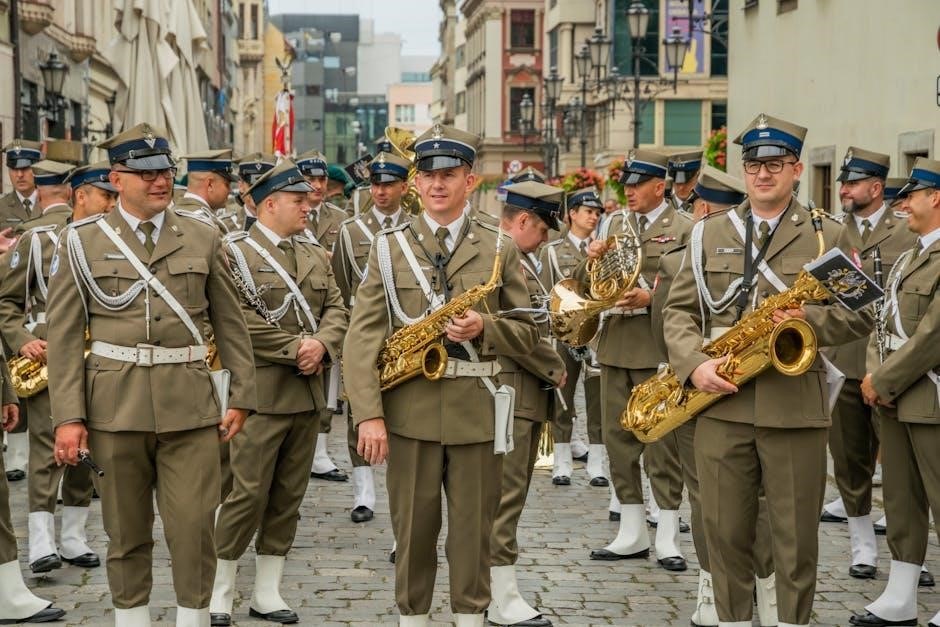
Though not a legally-binding oath, the Creed holds immense significance, frequently featured in public ceremonies and formal training. Its principles shape individual behavior and contribute to the overall strength and integrity of the U.S. Army. The digital PDF format ensures its enduring relevance and accessibility for generations of Soldiers.

Historical Context of the Creed
The modern Soldier’s Creed, while deeply ingrained in today’s Army culture, wasn’t always a formalized, universally recited statement. Its evolution reflects the Army’s ongoing efforts to define and reinforce its ethical standards. The current version gained prominence in the early 2000s, becoming a central component of initial entry training and professional development.
Prior to its widespread adoption, various iterations of Soldier oaths and principles existed, emphasizing duty, honor, and country. However, the need for a concise, memorable declaration of personal commitment led to the Creed’s development. The readily available PDF version of the Creed facilitates its study and understanding of its historical roots.
Its introduction coincided with a period of sustained military operations, highlighting the importance of a shared ethical foundation for Soldiers facing complex challenges. The Creed’s enduring relevance is reinforced by its continued use in formal ceremonies and its accessibility in digital PDF format for all personnel;
The Seven Tenets of the Soldier’s Creed
The Soldier’s Creed is structured around seven core tenets, each representing a fundamental principle guiding a Soldier’s conduct and commitment. These tenets – I am an American Soldier, I serve the People of the United States, I do my duty as assigned, I will always place the mission first, I will never accept defeat, I will never quit, and I will never leave a fallen comrade – collectively define the ethos of the U.S. Army.

Each tenet builds upon the previous one, creating a holistic framework for ethical decision-making and professional behavior. The PDF version of the Creed often includes detailed explanations of each tenet, fostering deeper understanding. These principles aren’t merely words; they are intended to be internalized and demonstrated in action.
Understanding these seven tenets is crucial for all Soldiers, and the easily accessible PDF format ensures consistent dissemination and reinforcement of these vital principles throughout their careers.
Tenet 1: I am an American Soldier
The opening declaration, “I am an American Soldier,” establishes a foundational identity rooted in national service and a commitment to the defense of the United States. This tenet transcends simply wearing a uniform; it signifies a voluntary acceptance of the responsibilities and sacrifices inherent in military life. The Soldier’s Creed PDF emphasizes this is a conscious choice, a dedication to something larger than oneself.
It embodies a pride in representing the nation and upholding its values. This initial tenet sets the stage for all subsequent principles, grounding a Soldier’s actions in a sense of duty and honor. The PDF often includes reflections on the historical significance of American soldiers and their contributions to freedom.
Furthermore, it’s a constant reminder of the trust placed upon them by the American people, shaping their conduct both on and off duty.

Tenet 2: I serve the People of the United States
The second tenet, “I serve the People of the United States,” shifts the focus from national identity to the citizenry a Soldier is sworn to protect; The Soldier’s Creed PDF clarifies this isn’t merely service to the government, but a direct commitment to the well-being and freedoms of every American. This principle underscores the unique position of the military within a democratic society – as protectors of the people, not rulers over them.
The PDF often highlights the sacrifices made by previous generations to secure these freedoms, reinforcing the gravity of this responsibility. It emphasizes that a Soldier’s actions must always be guided by a consideration for the impact on the populace.
This tenet fosters a sense of humility and accountability, reminding Soldiers they are entrusted with a sacred duty to safeguard the lives and liberties of those they serve.
Tenet 3: I do my duty as assigned
“I do my duty as assigned” – the third tenet of the Soldier’s Creed – is a cornerstone of military discipline and effectiveness. The Soldier’s Creed PDF emphasizes that duty isn’t self-defined; it’s received through the chain of command and executed without hesitation. This tenet acknowledges the hierarchical structure vital for operational success, demanding obedience to lawful orders.
The PDF often includes discussions on the importance of understanding the ‘why’ behind an assigned task, even when the task itself seems insignificant. It’s about recognizing how individual contributions fit into the larger mission objective.
Furthermore, the document clarifies that fulfilling one’s duty requires competence, initiative, and a commitment to excellence, regardless of personal preference or difficulty. It’s a pledge to uphold standards and achieve results.
Understanding Duty and Responsibility

The Soldier’s Creed PDF extensively explores the intertwined concepts of duty and responsibility, clarifying they are not interchangeable. Duty, as outlined in the Creed, is a legally or morally binding obligation assigned to a soldier. Responsibility, however, encompasses the accountability for one’s actions and decisions, extending beyond simply following orders.
The PDF highlights that accepting responsibility means owning both successes and failures, learning from mistakes, and striving for continuous improvement. It emphasizes that a soldier’s duty isn’t merely to perform a task, but to ensure it’s completed ethically and effectively.
Furthermore, the document details how understanding this distinction fosters proactive problem-solving and strengthens unit cohesion. It’s about internalizing a commitment to excellence and upholding the Army’s values in every action.
The Role of Obedience within Duty
The Soldier’s Creed PDF clarifies that obedience is a critical component of duty, but not its entirety. It emphasizes that lawful orders must be followed promptly and without hesitation, forming the bedrock of military discipline and operational effectiveness. However, the PDF stresses that blind obedience is discouraged.
Soldiers are expected to exercise critical thinking and moral courage, even while following orders. The document details the responsibility to question ambiguous or potentially unlawful commands through the chain of command. This isn’t insubordination, but a demonstration of responsible duty.
The PDF highlights that true obedience stems from understanding the purpose behind the order and its contribution to the overall mission. It’s about trusting leadership while maintaining personal accountability and ethical standards, reinforcing the Creed’s commitment to integrity.
Tenet 4: I will always place the mission first
The Soldier’s Creed PDF dedicates significant emphasis to this tenet, explaining it as a commitment to prioritizing the successful completion of the assigned objective above personal comfort, desires, or even safety. It’s not about self-sacrifice for its own sake, but recognizing that mission success often directly impacts the well-being of the team and the broader national interest.
The PDF clarifies that “mission first” doesn’t negate concern for fellow soldiers; rather, it frames teamwork as essential to achieving the objective. It underscores the need for disciplined focus, adaptability, and a willingness to overcome obstacles.
Furthermore, the document details how this tenet informs decision-making in complex situations, requiring soldiers to assess risks and prioritize actions based on their contribution to the overall mission goals. It’s a core principle driving operational effectiveness and strategic advantage.
Tenet 5: I will never accept defeat
The Soldier’s Creed PDF elaborates on this tenet, defining it not as a denial of hardship or setbacks, but as an unwavering commitment to persevere despite adversity. It’s a psychological fortitude built on resilience, determination, and a refusal to succumb to hopelessness, even in the face of overwhelming odds.

The PDF highlights that accepting defeat isn’t simply about losing a battle; it’s about relinquishing the will to fight, to innovate, and to overcome. It emphasizes the importance of maintaining a positive mental attitude and fostering a belief in the possibility of success, even when circumstances appear bleak.
This tenet, as detailed in the document, isn’t about reckless aggression, but about calculated persistence, learning from failures, and adapting strategies to achieve the ultimate objective. It’s a cornerstone of the American fighting spirit.
Resilience and Overcoming Adversity
The Soldier’s Creed PDF underscores that battlefield realities demand exceptional resilience. It’s not merely about physical toughness, but a mental and emotional fortitude to bounce back from setbacks, trauma, and prolonged stress. The document details how adversity is an inherent part of military service, and preparation for it is crucial.
Within the PDF, resilience is presented as a skill honed through training, mentorship, and self-awareness. Soldiers are encouraged to develop coping mechanisms, build strong support networks, and maintain a proactive approach to mental health. Overcoming adversity isn’t about avoiding hardship, but about learning to navigate it effectively.
The Creed, as presented in the PDF, emphasizes that every challenge presents an opportunity for growth, strengthening character and reinforcing the commitment to the mission. It’s a continuous process of adaptation and perseverance.
The Importance of a Positive Mental Attitude
The Soldier’s Creed PDF highlights a positive mental attitude as a cornerstone of effective combat readiness and overall success. It’s not simply about optimism, but a deliberate cultivation of mental strength, focus, and unwavering belief in the mission and one’s capabilities.
The PDF details how a positive mindset directly impacts a soldier’s ability to perform under pressure, overcome obstacles, and maintain cohesion within a team. It emphasizes the power of self-talk, visualization, and proactive problem-solving. A resilient spirit, fostered by a positive outlook, is presented as a critical defense against the psychological toll of warfare.
Furthermore, the document suggests that a positive attitude is contagious, influencing morale and inspiring others. It’s a vital component of leadership and a key factor in maintaining unit effectiveness, even in the face of overwhelming adversity.
Tenet 6: I will never quit
The Soldier’s Creed PDF prominently features the declaration, “I will never quit.” This tenet isn’t merely a statement of stubbornness, but a commitment to perseverance, resilience, and unwavering dedication to the mission, regardless of the challenges encountered. The PDF emphasizes that quitting undermines unit cohesion and jeopardizes operational success.
The document details how this tenet is deeply rooted in the historical examples of soldiers who overcame seemingly insurmountable odds through sheer determination. It’s presented as a fundamental aspect of the warrior ethos, demanding a refusal to surrender to fatigue, fear, or setbacks.
The PDF further clarifies that “never quitting” requires proactive problem-solving, seeking assistance when needed, and maintaining a positive mental attitude. It’s a commitment to pushing beyond perceived limits and upholding the standards of the U.S. Army.
Tenet 7: I will never leave a fallen comrade
The Soldier’s Creed PDF underscores the profound significance of “I will never leave a fallen comrade.” This tenet, central to the document, embodies the unwavering commitment to brotherhood and selfless service that defines the American Soldier. The PDF details this isn’t simply about physical rescue, but a pledge to support and honor those who have been wounded, injured, or killed in action.
The document highlights the historical context of this commitment, tracing it back to battlefield traditions of mutual support and sacrifice. It emphasizes the ethical considerations involved, stressing the moral obligation to assist fellow soldiers, even at personal risk.
Furthermore, the PDF explains that upholding this tenet requires comprehensive training in casualty care, tactical recovery procedures, and a deep understanding of the importance of teamwork. It’s a cornerstone of camaraderie and a testament to the bonds forged in service.
The Significance of Camaraderie and Teamwork
The Soldier’s Creed PDF consistently reinforces that success in military operations isn’t achieved through individual effort, but through robust camaraderie and effective teamwork. The document illustrates how several tenets – particularly “I will never leave a fallen comrade” – directly depend on a strong sense of unit cohesion.
The PDF details how the Creed fosters a culture where soldiers trust and rely on one another, understanding that collective strength surpasses individual capabilities. It emphasizes that shared hardship and mutual support build unbreakable bonds, essential for overcoming adversity on the battlefield.
Moreover, the document highlights the importance of clear communication, shared responsibility, and a willingness to sacrifice for the team. It’s presented as a foundational element of operational effectiveness and a key component of maintaining morale, ultimately contributing to mission success.
Ethical Considerations in Battlefield Support
While the Soldier’s Creed PDF primarily focuses on commitment to mission and comrades, it implicitly underscores the importance of ethical conduct during battlefield support. The tenets, when fully understood, demand adherence to the Law of War and respect for human dignity, even amidst conflict.
The document’s emphasis on duty (“I do my duty as assigned”) isn’t a blank check for unethical actions. Rather, it necessitates fulfilling obligations within a moral framework. The Creed’s principles encourage soldiers to question orders that violate ethical standards and to act with integrity in all situations.
Furthermore, the PDF implicitly supports the responsible use of force and the minimization of civilian casualties. Though not explicitly detailed, the core values embedded within the Creed promote a commitment to upholding the highest standards of conduct, even when facing extreme pressure.
Accessing the Soldier’s Creed PDF
Obtaining the Soldier’s Creed in PDF format is straightforward, with numerous official and reliable sources available online. The primary access point is through official Army websites, ensuring the document’s authenticity and currency. These resources typically offer the PDF for free download, catering to both active duty personnel and those interested in understanding Army values.
Official Army ROTC pages, like those associated with university programs (example: 906-487-2650), often host the PDF as a training aid. Additionally, various military education portals provide access. Caution should be exercised when utilizing third-party sources to verify the document’s integrity and ensure it aligns with the latest updated version (02/11/2026).
A quick online search using keywords like “Soldier’s Creed PDF” will yield numerous results, but prioritizing official government domains is crucial for accuracy.
Official Army Resources for the Creed
Official Army resources represent the most dependable source for the Soldier’s Creed PDF. The Army Publishing Directorate is a key repository, offering validated and current versions of all official documents, including the Creed. Accessing the Creed through these channels guarantees authenticity and adherence to the latest revisions (updated 02/11/2026).
Army ROTC websites, such as those linked to university programs, frequently provide the PDF for training purposes. These resources are generally vetted and reliable. Furthermore, the Army’s official training manuals and leadership publications will invariably include or reference the Creed, often with a downloadable PDF component.
Websites dedicated to Army regulations and policies also serve as trustworthy sources. Prioritizing these official domains ensures users receive the accurate and authorized version of the Soldier’s Creed, avoiding potentially outdated or inaccurate copies.
Third-Party Sources and Authenticity
While numerous third-party websites offer the Soldier’s Creed in PDF format, verifying authenticity is crucial. Unlike official Army resources, these sources aren’t subject to the same rigorous quality control. Variations in formatting or even content can occur, potentially leading to misinterpretation or the use of outdated versions.
Exercise caution when downloading from unofficial sites. Cross-reference the content with a known, verified PDF from the Army Publishing Directorate to ensure accuracy. Be wary of sites hosting multiple versions without clear revision dates. Prioritize sources that explicitly state their content is based on official Army publications.
Remember, the Soldier’s Creed is a foundational document; its integrity is paramount. Always prioritize official channels to guarantee you’re accessing the correct and current version, especially given the recent update (02/11/2026).
The Creed in Army Training
The Soldier’s Creed, often distributed as a readily accessible PDF, is deeply integrated into all phases of Army training. From initial entry training to advanced leadership courses, recruits and soldiers are required to memorize and internalize its seven tenets. This isn’t merely rote learning; it’s about instilling a core set of values and principles that guide conduct and decision-making.
Recitation and memorization are standard practices, frequently conducted during drill and ceremony. The Creed serves as a constant reminder of the responsibilities and expectations placed upon every soldier. It’s reinforced through practical exercises and scenario-based training, demonstrating how each tenet applies to real-world situations;
The PDF version facilitates self-study and review, allowing soldiers to continually reaffirm their commitment to the Creed’s principles throughout their careers. It’s a living document, shaping the ethical and professional foundation of the U.S. Army.
Recitation and Memorization Practices
Consistent recitation of the Soldier’s Creed, often utilizing the easily shared PDF version, is a cornerstone of Army culture. New recruits begin memorization immediately upon entry, with daily drills reinforcing each tenet. This isn’t simply about remembering words; it’s about internalizing the values they represent.
Drill sergeants employ various techniques, including call-and-response and individual recitation, to ensure comprehension and retention. The Creed is frequently integrated into physical training, creating a mental and physical connection to its principles. Soldiers are expected to recite it flawlessly, demonstrating discipline and commitment.
The availability of the PDF allows for independent study and self-assessment. Beyond initial training, the Creed is revisited during professional development sessions and formal ceremonies, solidifying its importance throughout a soldier’s career. It’s a continuous process of reaffirmation.
The Creed’s Impact on Soldier Conduct
The Soldier’s Creed, widely accessible as a PDF document, profoundly shapes ethical decision-making and professional behavior within the Army. It serves as a constant reminder of the responsibilities and values expected of every soldier, influencing actions both on and off duty.
By internalizing the tenets, soldiers are encouraged to prioritize the mission, demonstrate unwavering resilience, and uphold the highest standards of integrity. The Creed fosters a sense of collective identity and shared purpose, strengthening unit cohesion and promoting selfless service.
The readily available PDF facilitates regular review and reflection, reinforcing these principles. It’s not merely a recited statement, but a guiding philosophy that impacts conduct during challenging situations, particularly in public safety scenarios and complex operational environments. It promotes accountability and ethical leadership.
Public Perception and the Soldier’s Creed
The Soldier’s Creed, often distributed as a PDF for wider access, significantly influences public perception of the U.S. Army. It presents a clear articulation of the values and principles that guide soldier behavior, fostering trust and respect among civilians.
The Creed’s emphasis on duty, selfless service, and integrity projects an image of professionalism and dedication. Its frequent recitation in formal ceremonies, documented and shared via PDF formats, reinforces this positive portrayal. This contributes to a greater understanding of the sacrifices made by service members.
However, maintaining alignment between the ideals expressed in the Creed and actual conduct is crucial. Any discrepancy can erode public trust. The accessibility of the PDF allows for greater transparency and accountability, encouraging soldiers to embody the values they profess.
The Creed in Formal Ceremonies
The Soldier’s Creed, frequently accessed as a PDF for standardized presentation, holds a prominent place in Army formal ceremonies. It’s more than just words; it’s a unifying declaration recited during graduations, changes of command, and memorial services.
During these events, soldiers stand at attention, demonstrating collective commitment to the principles outlined in the Creed. The synchronized recitation, often utilizing the easily distributed PDF version, emphasizes unity and shared values. This practice instills a sense of belonging and reinforces the ethical foundation of the force.
The PDF format ensures consistency in the wording and presentation of the Creed across all ceremonies. It serves as a tangible reminder of the oath taken and the responsibilities assumed by every soldier, solidifying its importance within Army culture and tradition.
The Creed and Army Values
The Soldier’s Creed, often distributed as a readily available PDF, isn’t simply a statement; it’s a distillation of core Army Values. It embodies Loyalty, Duty, Respect, Selfless Service, Honor, Integrity, and Personal Courage, translating abstract principles into a personal commitment for each soldier.
Each tenet within the Creed directly reflects and reinforces these values. For example, “I will always place the mission first” exemplifies selfless service and duty, while “I will never quit” demonstrates courage and resilience. The PDF serves as a constant reminder of these foundational principles.
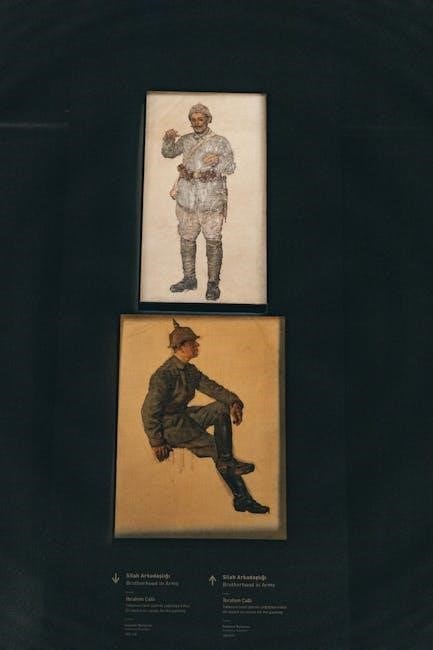
By regularly reciting and internalizing the Creed – easily accessible through its PDF format – soldiers actively integrate Army Values into their daily conduct and decision-making. It’s a powerful tool for ethical development and maintaining the highest standards of professionalism within the ranks.