Blacksmith Leveling Guide ― An Overview (01/27/2026)
Embark on a journey to master the forge! This comprehensive guide, penned by gaming experts like Matt Hook and Brad Fleischman,
will elevate your blacksmithing skills, offering strategies for efficient leveling and maximizing your crafting potential within the game.
Blacksmithing is a fundamental crafting skill, allowing players to forge weapons, armor, and tools – essential for survival and progression. It’s a profession deeply rooted in resourcefulness, demanding a keen understanding of materials and techniques. From humble iron implements to magnificent steel creations, the blacksmith’s craft offers both practical benefits and substantial rewards.
This guide, brought to you with insights from passionate gamers like Matt Hook, a CPA with a knack for guides, and Brad Fleischman, a gaming industry veteran, will demystify the process. We’ll explore the intricacies of material gathering, crafting recipes, and skill progression. Whether you’re a novice or a seasoned adventurer, mastering blacksmithing will unlock a world of possibilities, enhancing your gameplay experience and providing a reliable source of income.
Why Level Blacksmithing?
Investing in blacksmithing offers a multitude of advantages. Primarily, it grants self-sufficiency, allowing you to create and repair your own gear, bypassing reliance on merchants and the fluctuating market. Higher skill levels unlock access to superior recipes, enabling the crafting of powerful weapons and durable armor, significantly boosting your combat effectiveness.
Furthermore, as highlighted by experts like Matt Hook and Brad Fleischman, blacksmithing presents a lucrative economic opportunity. Crafted items consistently command high prices, providing a steady income stream. Leveling also unlocks specializations and perks, tailoring your skills to specific crafting niches. Ultimately, mastering blacksmithing isn’t just about forging metal; it’s about empowering your character and shaping your destiny within the game world.
Early Game Blacksmithing (Levels 1-20)
Begin your forging journey! Focus on readily available resources and simple recipes to quickly gain experience and establish a solid foundation.
Gathering Basic Materials
Iron ore and wood are your initial priorities. Early blacksmithing heavily relies on consistently sourcing these fundamental components. Iron ore is commonly found in beginner-friendly mining locations – look for surface deposits and shallow caves. Regularly check these spots, as respawn rates are crucial for uninterrupted crafting.
Wood, essential for fueling your forge, can be obtained by chopping trees. Prioritize common tree types to maximize efficiency. Consider investing in a basic axe early on to speed up the gathering process. Don’t underestimate the value of scavenging; broken weapons and armor can often be salvaged for raw materials, providing a supplementary source of iron.
Efficient inventory management is key. Regularly sell excess materials to merchants to free up space for more valuable resources as you progress. Remember, consistent material gathering is the bedrock of successful early-game blacksmithing!
Crafting Iron & Steel Items
Focus on high-volume, low-cost recipes initially. Iron daggers, simple swords, and iron helmets provide excellent experience per material cost at lower levels. Prioritize crafting items you can reliably sell for a profit, creating a self-sustaining resource loop. Steel items, requiring iron and a refining agent, offer a significant experience boost but demand more resource investment.
Experiment with different recipes to discover those offering the best experience-to-cost ratio. Don’t neglect crafting tools like pickaxes and axes; these are consistently in demand and provide steady leveling. Mastering basic repairs is also vital – repairing damaged equipment yields experience and saves gold.
As you gain proficiency, begin crafting sets of armor or weapon types to unlock potential crafting bonuses and accelerate your progress towards higher blacksmithing levels.
Early Leveling Locations & Quests
Begin your journey in towns with readily available iron ore deposits. Riverwood and Whiterun in Skyrim are excellent starting points, offering proximity to mines and merchants. Seek out quests from blacksmiths and townspeople requesting crafted items – these provide focused experience and often reward valuable materials.
The Companions questline in Skyrim offers consistent blacksmithing opportunities, particularly in repairing and improving weapons and armor. Look for radiant quests that specifically request iron or steel items. Prioritize quests with repeatable objectives for sustained leveling.
Don’t overlook opportunities to salvage broken equipment found during exploration; deconstructing these items yields materials and contributes to your skill progression.
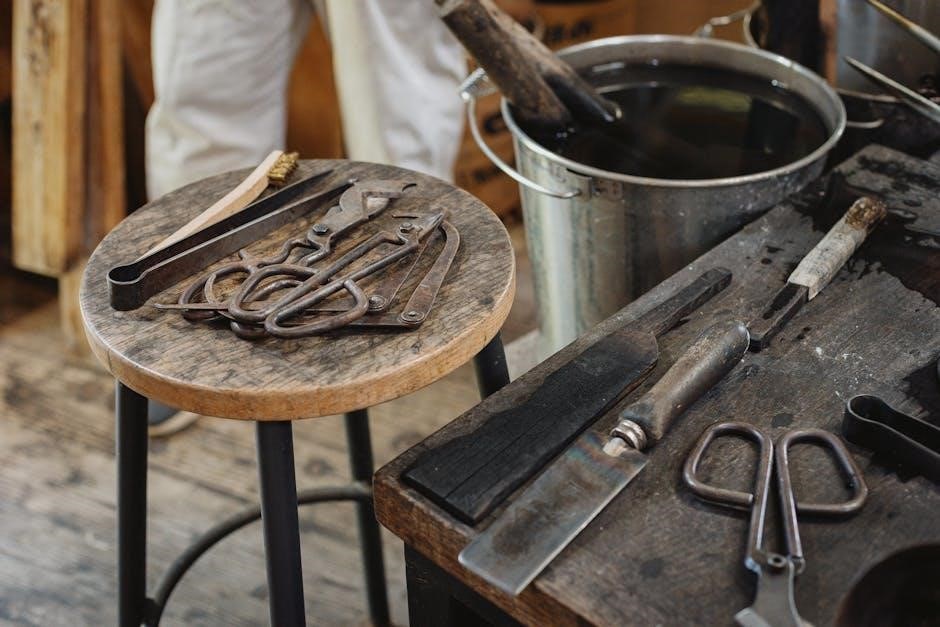
Mid-Game Blacksmithing (Levels 21-40)
Venture forth to acquire rarer ores! This stage demands exploration and strategic resource gathering, unlocking superior crafting possibilities and expanding your skillset.
Advanced Material Acquisition (e.g., Orichalcum)
Reaching levels 21-40 necessitates a shift in material sourcing. Forget relying solely on common iron and steel; the true path to progression lies in securing rarer, more potent resources. Orichalcum, a highly sought-after metal, becomes crucial for crafting superior weapons and armor.
Locating Orichalcum often involves venturing into dangerous, high-level zones – think challenging dungeons or monster-infested regions. Mining nodes yielding this precious ore are typically guarded by formidable creatures, demanding careful preparation and strategic combat. Consider investing in tools that increase mining yield or chance of discovery.
Furthermore, explore trade routes and merchant inventories. Sometimes, Orichalcum can be purchased, albeit at a significant cost. Establishing relationships with factions known to trade in rare materials can also prove beneficial. Remember, consistent acquisition of advanced materials is the cornerstone of mid-game blacksmithing success.
Crafting Superior Weapons & Armor
With access to advanced materials like Orichalcum, levels 21-40 unlock the ability to forge truly exceptional weaponry and armor. Focus on recipes that demand these higher-tier resources; crafting iron swords will no longer yield significant experience gains or valuable products. Prioritize designs offering substantial stat boosts and unique properties.
Experiment with different weapon types – swords, axes, maces, bows – and armor sets to diversify your crafting portfolio. Mastering multiple crafting disciplines increases your overall skill and opens up new market opportunities. Pay close attention to the required skill level for each recipe; attempting to craft beyond your current ability often results in failure.
Remember to consistently refine your crafting techniques. Successful crafting not only levels your blacksmithing skill but also provides powerful gear for yourself or lucrative items for sale, accelerating your overall game progression.
Utilizing Blacksmithing Skill Books
Skill books are invaluable assets during the mid-game blacksmithing phase (levels 21-40), providing substantial boosts to your skill level and unlocking access to more complex crafting recipes. Locate these books through quest rewards, vendor purchases, or exploration – often found in dungeons or hidden locations.
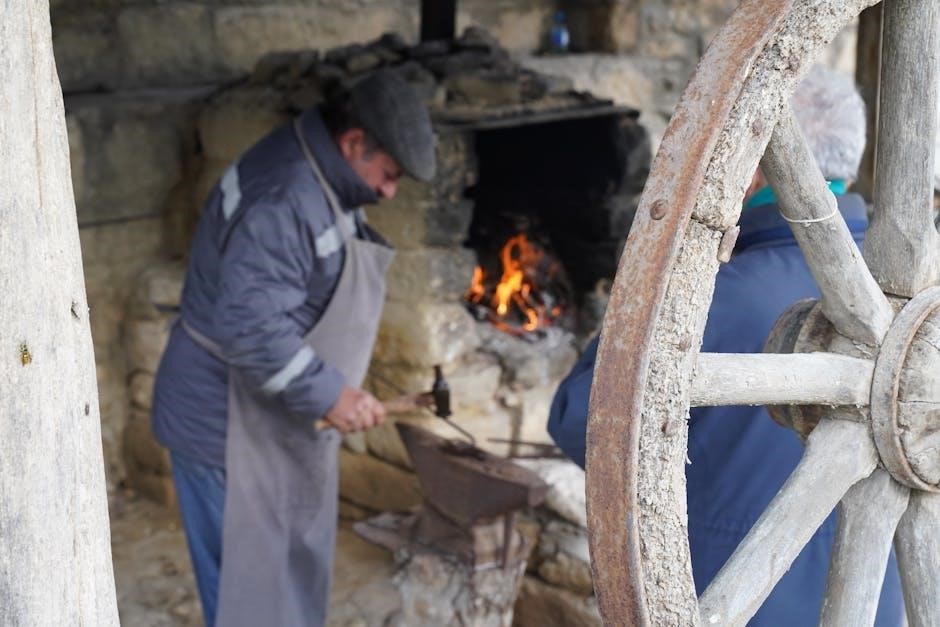
Prioritize skill books that align with your chosen specialization. If focusing on weapon crafting, seek books that enhance weapon forging proficiency. Conversely, armor-focused blacksmiths should prioritize books improving armor creation. Don’t hoard books unnecessarily; utilize them strategically to overcome skill bottlenecks.
Remember that skill books typically have a usage restriction, so plan accordingly. Combining skill book usage with consistent crafting practice yields the fastest and most effective leveling results, propelling you towards mastery.

Late-Game Blacksmithing (Levels 41-50)
Reach peak forging potential! Master tempering, enchanting, and legendary item creation to dominate the market and become a renowned artisan;
Mastering Tempering & Enchanting
At levels 41-50, simply crafting isn’t enough; true mastery lies in tempering and enchanting. Tempering significantly boosts a weapon’s or armor’s base stats, requiring precise timing and high-quality materials. Experiment with different tempering techniques to discover optimal stat combinations for various builds.
Enchanting adds magical properties, dramatically altering an item’s functionality. Focus on acquiring rare enchanting materials and learning powerful enchantment recipes. Combining a perfectly tempered item with a potent enchantment yields truly exceptional gear. Consider specializing in specific enchantment types to maximize efficiency and profitability. Remember, enchanting failures can be costly, so invest in skills or perks that mitigate risk!
Successfully mastering these skills unlocks the potential to create items sought after by all players, establishing you as a premier blacksmith.
Crafting Legendary Items
Reaching levels 41-50 unlocks the ability to forge Legendary Items – the pinnacle of blacksmithing achievement. These require exceptionally rare materials, often obtained from challenging endgame content or dedicated resource gathering. Expect to utilize Orichalcum and other advanced components acquired throughout your journey.
Legendary recipes are typically hidden or require completing difficult quests. Mastering tempering and enchanting (as discussed previously) is crucial for maximizing a Legendary item’s potential. These items aren’t just statistically superior; they often possess unique properties and effects, making them highly desirable.
Successfully crafting a Legendary item is a significant accomplishment, showcasing your dedication and skill. They represent the ultimate goal for any aspiring blacksmith!
Optimizing for Profit: Selling Crafted Goods
Blacksmithing isn’t just about self-sufficiency; it’s a viable path to in-game wealth. Late-game crafted items, particularly those with successful tempering and enchanting, command high prices on player markets. Understanding market demand is key – identify items frequently sought by players, like specific weapon types or armor sets.
Consider specializing in crafting items for particular classes or playstyles to establish a niche. Regularly monitor auction house prices to adjust your crafting and selling strategies. Efficient material sourcing, as previously discussed, directly impacts your profit margins.
Don’t underestimate the value of offering repair services alongside your crafted goods, creating a consistent income stream. A skilled blacksmith can become a cornerstone of the in-game economy!
Specializations & Perks
Tailor your blacksmithing path! Choosing a specialization and selecting essential perks, guided by experts like Matt Hook, unlocks unique crafting bonuses and efficiencies.
Choosing a Blacksmithing Specialization
As you progress, specializing your blacksmithing skills becomes crucial for efficient crafting and maximizing profits. Several distinct paths cater to different playstyles and economic opportunities. Weapon specialization focuses on forging swords, axes, and maces, demanding precision and high-quality materials for optimal damage output. Armor specialization centers on crafting durable and protective gear, vital for tanking and survivability.
Alternatively, you could pursue a jewelry specialization, crafting rings, necklaces, and amulets, often requiring rare gems and intricate designs. Finally, a tools and utility specialization allows you to create essential items for other professions, like pickaxes for miners or fishing rods. Consider your preferred gameplay loop and the market demands when selecting your specialization; expert guidance from sources like those provided by Matt Hook can prove invaluable.
Essential Blacksmithing Perks
Maximizing your blacksmithing efficiency requires strategic investment in key perks. “Master Smithing” significantly increases the quality of crafted items, boosting their stats and sale value. “Tempering Expertise” is vital for enhancing weapon and armor durability, reducing repair costs and increasing longevity. “Resourcefulness” reduces material costs, allowing for greater profit margins, a skill valued by professionals like Brad Fleischman.
“Arcane Blacksmithing” unlocks the ability to craft enchanted items, dramatically increasing their desirability. Prioritize perks that align with your chosen specialization; weapon smiths should focus on tempering and quality, while armorers benefit from durability and resourcefulness. Carefully consider perk synergies to create a powerful and efficient blacksmithing build, guided by expert advice.

Troubleshooting & Common Issues
Facing setbacks? This section addresses common blacksmithing hurdles, offering solutions for material scarcity and crafting failures, ensuring a smoother progression.
Dealing with Material Scarcity
Resourcefulness is key! Material scarcity is a frequent challenge for blacksmiths, especially when pursuing higher-level crafts. Diversify your gathering methods; don’t rely solely on mining or vendor purchases. Explore various zones, as resource distribution isn’t uniform. Consider investing in gathering skills like mining and scavenging to supplement your supply.
Auction houses and player marketplaces can be invaluable, but prices fluctuate. Establish a network of trading partners to secure consistent material flow. Don’t underestimate the power of salvaging unwanted items – often, they yield valuable components. Prioritize crafting recipes that align with readily available resources, adapting your strategy to minimize bottlenecks. Efficient inventory management is crucial; avoid hoarding unnecessary materials.
Fixing Crafting Failures
Embrace the learning curve! Crafting failures are inevitable, even for seasoned blacksmiths. Don’t be discouraged; analyze the reasons behind them. Often, failures stem from insufficient skill level or missing required perks. Carefully review the recipe requirements and ensure you meet all prerequisites. Utilizing higher-quality materials can significantly reduce failure rates, though at a cost.
Certain perks and enchantments can provide crafting bonuses, mitigating the risk of failure. Experiment with different crafting techniques and material combinations. Keep a detailed log of your attempts, noting successes and failures to identify patterns. Remember, each failure is a learning opportunity, bringing you closer to mastery of the forge!